Why are brands mining the past in times of AI?
Digital overload, rapidly changing trends now pushing consumers towards brands and familiar cultural moments, with many seeking comfort and emotional connection in shared past experiences, say players
 by
by
Published: Jun 10, 2026 8:49 AM | 8 min read
 Follow Us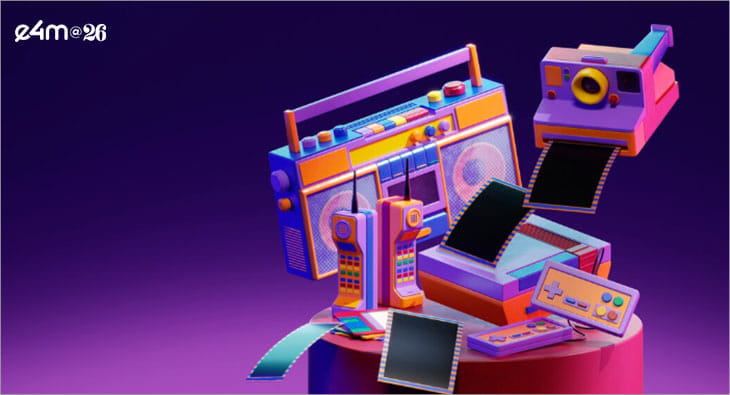

- In 2026, brands across various sectors are increasingly utilizing nostalgia in marketing, reviving vintage logos, retro packaging, and discontinued products to capture consumer attention amidst a crowded advertising landscape.
- The trend reflects a deeper shift in consumer behavior, as individuals seek familiarity and emotional connections in a rapidly changing world, with younger generations, including Gen Z, engaging with Y2K aesthetics and cultural references from the past.
- Successful nostalgia-driven marketing campaigns, such as those by Juicy Couture and McDonald's, demonstrate that nostalgia can translate into measurable business outcomes when executed authentically and combined with innovative storytelling.
- Marketers face the challenge of ensuring that nostalgia remains fresh and relevant, avoiding predictability while balancing familiarity with innovation to effectively connect with contemporary audiences.
The year is 2026, but advertising seems to have one eye firmly on the past.
From vintage logos and retro packaging to the return of discontinued products, brands across categories are leaning into nostalgia. Fashion is deep in its Y2K era. FMCG brands are reviving old designs. Entertainment companies are rebooting beloved franchises. Even digital-first brands that didn't exist in the 90s or early 2000s are borrowing cues from cassette tapes, flip phones and pixelated internet culture.
Nostalgia, once an occasional creative device, has become one of marketing's favourite tools.
But why is everyone suddenly looking back?
Part of the answer lies in how crowded modern marketing has become. Consumers are exposed to an endless stream of content every day, making familiarity a valuable shortcut to attention. An old jingle, a classic pack design or a childhood favourite can spark recognition instantly in a way that entirely new brand assets often struggle to do.
Yet the nostalgia boom may be saying as much about consumers as it does about marketers.
At a time when everything from technology to culture seems to be changing at breakneck speed, the past can feel reassuring. Familiar symbols, products and rituals offer a sense of continuity in an environment that often feels overwhelming.
That may explain why the nostalgia wave is arriving at the same moment as the AI boom. As artificial intelligence reshapes the way people search, create and work, many consumers are gravitating towards analog aesthetics, physical experiences and cultural references from simpler times.
The result is an interesting contradiction: some of today's most future-facing marketing campaigns are built around memories from a pre-smartphone world.
From cultural recall to commercial opportunity
While nostalgia may function as a storytelling device, brands are increasingly seeing its influence reflected in consumer demand and purchasing behaviour.
Abhinav Kumar, Co-Founder & CEO of Brand Concepts Limited (licensed luggage and accessories maker for Tommy Hilfiger, Benetton, Aeropostale and Juicy Couture), said nostalgia today reflects a deeper shift in consumer behaviour. Amid digital overload and rapidly changing trends, consumers are gravitating towards brands and cultural moments that feel familiar and emotionally meaningful.
He cited the resurgence of Juicy Couture, driven by the revival of Y2K fashion, as an example of how heritage brands are finding relevance with both millennials and Gen Z. According to Kumar, younger consumers are not simply embracing nostalgia but reinterpreting it in their own way. He added that nostalgia's appeal lies in its ability to combine familiarity with aspiration, making it a powerful tool for building emotional connections and cultural relevance.
“Globally, the success of heritage brands such as Juicy Couture illustrates that nostalgia, when executed authentically, can translate into measurable business outcomes,” he said, adding, “The brand's resurgence has been driven by the renewed popularity of Y2K culture, strategic collaborations, heritage-inspired collections, and the revival of iconic products that continue to resonate across generations.”
Kumar noted that Brand Concepts' decision to introduce Juicy Couture in India was driven by the growing relevance of nostalgia-led consumption. He said the strong response to the launch validated the company's belief that consumers are increasingly seeking globally recognised brands with heritage and emotional recall, a trend that has also shaped its retail expansion and category growth plans.
In recent years, brands around the world have successfully transformed memories into business opportunities. Fast-food giant McDonald's repeatedly generated buzz through adult-focused Happy Meals and the return of cult-favourite menu items. PepsiCo has periodically revived legacy packaging and iconic products to tap into emotional familiarity. Mattel's revival of Barbie culminated in a global cultural phenomenon that extended far beyond toys, while gaming companies continue to remaster decades-old titles for new audiences.
India is witnessing a similar trend. Brands such as Amul, Parle Products and Rasna frequently lean on decades of cultural memory in their communication. Fashion labels are embracing 90s-inspired silhouettes, while music-led campaigns increasingly remix iconic Bollywood tracks to trigger instant recall among millennials. Streaming platforms continue to revive legacy television shows and classic film franchises, betting that familiarity can drive both engagement and subscriptions.
Beyond fashion and heritage brands, nostalgia is also shaping product design and consumer engagement across home and lifestyle categories.
Aditi M Agrawal, Co-Founder of DTC lifestyle and home decor brand Nestasia, said nostalgia marketing reflects a deeper shift in consumer behaviour rather than just a creative trend. According to her, amid constant technological and cultural change, consumers are increasingly seeking the comfort, familiarity and emotional connection associated with shared experiences from the past.
“Digital fatigue amplifies this pull. Familiar objects and rituals instantly reconnect people with existing memories, creating an emotional response that cuts through a crowded landscape. What's interesting is that consumers don't want to go back in time; they want to revisit those feelings, without the inconveniences that came with them,” she explained.
Agrawal added that the impact of nostalgia-led initiatives extends beyond immediate sales and is often reflected in stronger emotional resonance, engagement and long-term brand recall. At Nestasia, she said, products such as cast iron cookware, tea cups, storage jars and water bottles often spark memories of family traditions, home-cooked meals and childhood experiences, creating deeper consumer connections.
According to her, consumers are often responding not just to the product itself but to the memories and rituals associated with it. She added that nostalgia is most effective when familiar experiences are reimagined for modern lifestyles, making it a lens for product design, storytelling and consumer engagement rather than a standalone marketing strategy.
Comfort in a chaotic world
The trend is especially visible among Gen Z. Despite having no direct memory of many 90s and early-2000s cultural moments, younger consumers have enthusiastically adopted Y2K fashion, digital camera photography, vintage gaming consoles and retro-inspired design.
For brands, this expands nostalgia's audience beyond those who actually lived through the era. What begins as memory for one generation becomes aesthetic discovery for another.
For marketers, this raises an interesting question: if younger consumers have no lived memory of these eras, what explains the growing appeal of nostalgia-led content and campaigns?
Rishabh Shrivastav, National Creative Director, PivotRoots said, “Advertising has always used many devices and narratives; nostalgia has always been one of them. The spectrum of what content can do and how content is made and consumed is changing much faster than it ever has. The accessibility, frequency, and platform dictate how the audience digests and reacts to the content.”
He noted that while Gen Z did not experience the 80s and 90s firsthand, they are discovering those eras through music, films, memes and cultural references passed down by their parents. From listening to Michael Jackson and Bob Dylan to sharing clips of films featuring Al Pacino, Amitabh Bachchan and Anil Kapoor, younger audiences are engaging with the past in new ways. He added that while nostalgia is everywhere, it resonates best when repackaged in contemporary formats, styles and storytelling techniques.
When nostalgia becomes strategy
The same shift is evident in fashion, where younger consumers are rediscovering trends from earlier decades through social media and creator culture.
This was further reiterated by Sumit Jasoria, CEO, Co-founder, NEWME, a fast-fashion brand for Gen Z consumers. “Social media has made old trends cool again. A lot of Gen Z is discovering Y2K and 90s fashion for the first time. People connect emotionally with things they recognize, so nostalgia naturally gets attention,” Jasoria said.
He added that the resurgence of old silhouettes, prints and aesthetics in fashion reflects growing consumer interest in nostalgia. According to him, nostalgia serves both as a creative route for brands and a response to what consumers are already engaging with.
Yet, as nostalgia becomes increasingly common across categories, marketers face a new challenge: ensuring that familiarity does not turn into predictability.
The risk, however, is that nostalgia can quickly become formulaic.
As more brands chase the same references, consumers may begin to see retro marketing as predictable rather than authentic. Simply reviving an old logo or repackaging a legacy product is unlikely to sustain long-term relevance if it is not backed by innovation, utility or a meaningful brand story.
The most successful nostalgia campaigns tend to balance familiarity with freshness. They use the past as a starting point rather than a destination.
Shrivastav further argued that nostalgia alone cannot drive business outcomes and is most effective when supported by strong insights, communication and creative execution. He described nostalgia as a powerful creative device that works best when paired with emotions or humour, helping brands build affinity, recall and cultural relevance.
According to him, nostalgia-led campaigns are particularly effective at shaping brand personality and making brands more relatable to Gen Z, who often engage with a brand's identity as much as its offerings. However, he noted that nostalgia is less commonly used as a direct sales driver and is typically deployed to achieve broader brand-building objectives.
That may ultimately explain why nostalgia remains so powerful. At its best, it is not really about looking backwards. It is about helping consumers make sense of the present.
As brands race to capture attention in an increasingly fragmented media landscape, nostalgia is proving to be more than a fleeting creative trend. Whether through Y2K fashion, revived heritage brands or familiar household rituals, marketers are tapping into a deeper consumer desire for comfort, familiarity and emotional connection. Yet the brands most likely to succeed will be those that do more than recreate the past. Their challenge will be to reinterpret old memories for new audiences, turning cultural recall into contemporary relevance.
Read more news about Marketing News, Advertising News, PR and Corporate Communication News, Digital News, People Movement News
For more updates, be socially connected with us onInstagram, LinkedIn, Twitter, Facebook, YouTube & Google News